


HDB Inheritance Rules: What Beneficiaries Need to Know

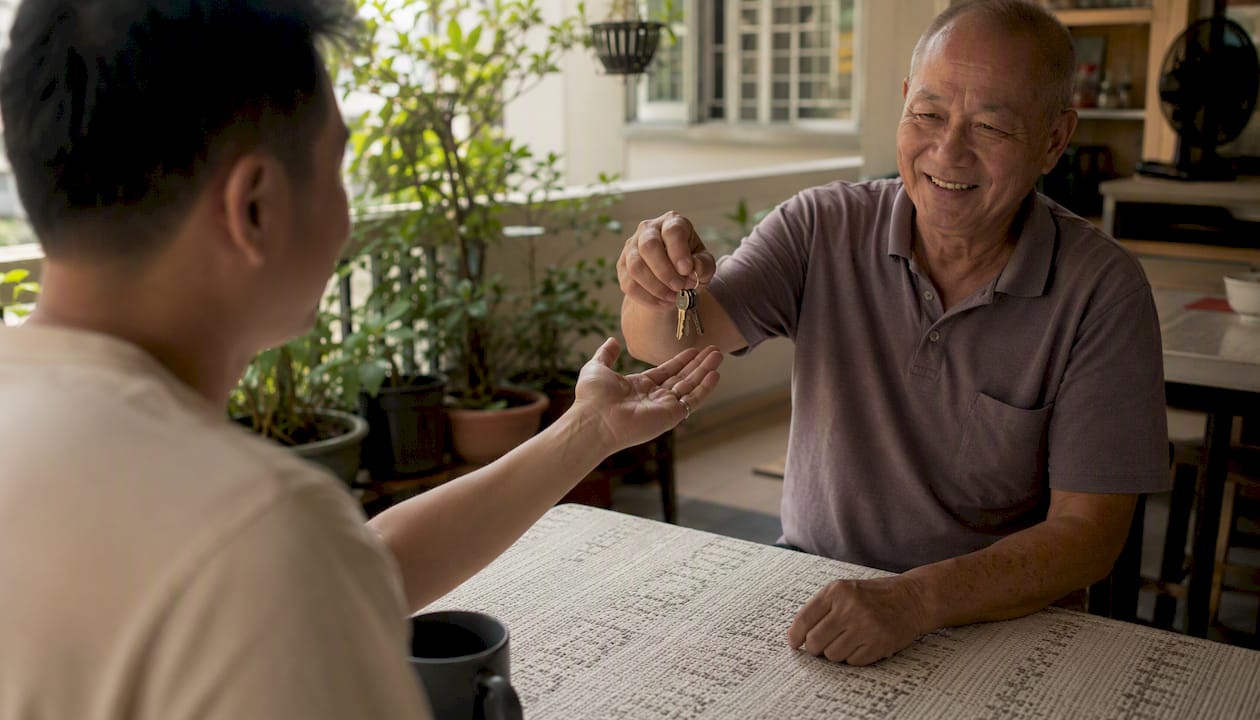
A beneficiary can always inherit an interest in an HDB flat. Whether they can keep it is a separate question, and it comes down entirely to HDB’s eligibility conditions: citizenship or PR status, being at least 21, forming a valid family nucleus, physically occupying the unit, and not owning private property that hasn’t been disposed of. Inheritance under the law and retention under housing policy are two different tests, and missing that distinction is where most families lose time.
If the flat was held in joint tenancy, notify the Singapore Land Authority (SLA) with a Notice of Death. If it was held as tenancy‑in‑common, or there’s a will to execute, the executor or a family member needs to start the probate process and separately notify the HDB branch managing the flat. Acting early matters for three reasons:
It locks in evidence (death certificate, lease documents) before they go missing or get disputed.
It prevents the flat from sitting in limbo, which can trigger avoidable arrears and insurance lapses.
It preserves eligibility for stamp duty remissions on family transfers, which have conditions tied to timing and who remains on the lease.
Here’s the order most families should move in:
Confirm the manner of holding (joint tenancy or tenancy‑in‑common) from the duplicate lease.
Lodge Notice of Death with SLA, or engage a solicitor for a Grant of Probate or Letters of Administration.
Contact the HDB branch managing the flat to start the ownership change process.
Key Takeaways
Retaining an inherited HDB flat depends on meeting HDB’s own eligibility rules, separate from whatever a will or the Intestate Succession Act determines.
Point | Details |
Manner of holding decides the process | Joint tenancy transfers automatically via survivorship; tenancy‑in‑common needs a court grant. |
Court grants come first | Executors need Grant of Probate; administrators need Grant of Letters of Administration before HDB acts. |
HDB eligibility is separate from the will | Age, citizenship/PR, family nucleus, and occupation rules apply regardless of what the will says. |
Other property triggers disposal | Beneficiaries owning private property must generally dispose of it to retain the inherited flat. |
Elite Legacy Planning coordinates the full path | From will drafting to trust structuring, the firm helps align estate documents with HDB’s actual rules. |
Table of Contents
What Are HDB Inheritance Rules for Joint Tenancy vs Tenancy‑in‑Common?
Can You Keep an Inherited HDB Flat? Eligibility Rules Explained
How Do Divorce, Other Property, or Citizenship Loss Affect HDB Inheritance?
What Will Inheriting an HDB Flat Cost, and How Long Does It Take?
Why Getting the Manner of Holding Right Matters More Than People Think
How Elite Legacy Planning Supports HDB Inheritance and Estate Matters
What Are HDB Inheritance Rules for Joint Tenancy vs Tenancy‑in‑Common?
The manner of holding on the lease decides everything that follows. Get this wrong and you’ll waste weeks chasing the wrong process.
Joint tenancy carries the right of survivorship. When one joint owner dies, their share doesn’t pass through a will or intestacy at all. It automatically consolidates into the surviving owner or owners. The only administrative step is lodging a Notice of Death with SLA, which updates the land register to reflect the surviving owner’s full interest. No court order is needed for this part.
Tenancy‑in‑common works differently. Each owner holds a specified, distinct share, and there’s no survivorship. When one owner dies, their share doesn’t go to the co‑owner automatically. It passes according to their will, or under the Intestate Succession Act if there’s no will. That means someone has to apply for a Grant of Probate or Grant of Letters of Administration before HDB will recognize any change in ownership.
The practical gap between these two paths is significant:
Joint tenancy: no court process, weeks rather than months, SLA lodgment is usually enough.
Tenancy‑in‑common: court grant required first, HDB ownership change second, timeline stretches to several months depending on court workload and estate complexity.
Pro Tip: Check the duplicate lease or the original sale and purchase agreement for the phrase “joint tenants” or “tenants‑in‑common with shares of X% and Y%.” If you can’t find the document, call the HDB branch that manages the flat. They hold the record and can confirm the manner of holding over the phone once you verify your relationship to the deceased.
What Happens Legally When an HDB Owner Dies?
Three separate legal tracks apply depending on whether there’s a will, no will, or a Muslim estate. Each has its own court process and its own paperwork before HDB will even consider an ownership change.
If there’s a valid will, the named executor applies to the court for a Grant of Probate. Once granted, the executor takes that document to HDB and applies to register their legal right, which allows HDB to process the change in ownership under the terms of the will.
If there’s no will, the estate is intestate, and the Intestate Succession Act determines who inherits and in what proportion. A family member, usually a spouse or adult child, applies for a Grant of Letters of Administration. The court appoints an administrator, and that person then deals with HDB the same way an executor would.
If the deceased was Muslim, inheritance follows faraid principles rather than the Intestate Succession Act. The family applies to the Syariah Court for an Inheritance Certificate, which sets out each heir’s entitled share. That certificate then feeds into the same court and HDB process used for other intestate estates.
A few terms worth knowing plainly:
Executor — the person named in a will to carry out its instructions.
Administrator — the person appointed by the court when there’s no will.
Grant of Probate / Letters of Administration — the court’s legal authorization to deal with the estate’s assets, including the flat.
Inheritance Certificate — the Syariah Court’s determination of each heir’s share under faraid.
Even with a signed will in hand, nothing about HDB ownership changes until a court grant exists and HDB has separately confirmed the proposed new owner meets its own eligibility rules. A will names who should inherit; it doesn’t override housing policy.
Court processing for straightforward, uncontested estates commonly takes a typical several-month period from filing to grant. Contested estates or those with overseas assets can take significantly longer, sometimes over a year.
Can You Keep an Inherited HDB Flat? Eligibility Rules Explained
This is where hope meets policy. Inheriting the legal right to a share doesn’t automatically mean you get to live in the flat or hold it in your name. HDB runs its own eligibility check on top of the court process, and it’s set out in the Change in Flat Ownership Terms and Conditions.
The core checklist looks like this:
Citizenship or PR status — you need to be a Singapore Citizen or Permanent Resident.
Minimum age — at least 21 years old at the time of application.
Family nucleus — you generally need to form an eligible family nucleus recognized under HDB schemes, though single applicants may qualify under specific schemes.
Occupation — you’re expected to physically occupy the flat, not hold it as an investment.
Minimum Occupation Period (MOP) — if the flat hasn’t cleared its MOP, that affects what you can do with it afterward, including selling or renting it out.
Private property ownership is the most common dealbreaker. If a beneficiary already owns private property, or disposed of one within the past 15 months, HDB generally requires them to dispose of that other property to retain the inherited flat. There’s no quiet workaround here. HDB checks this against property records during the application.
There’s also a PR‑specific rule: if every proposed owner on the flat is a Permanent Resident (no Singapore Citizen among them), HDB typically requires all of them to have held PR status for at least three years, alongside the usual occupation obligations.
A few scenarios show how this plays out in practice:
A surviving spouse who already lives in the flat usually has the smoothest path. They typically meet the family nucleus and occupation requirements already, and the transfer is mostly paperwork.
An adult child who inherits a share but owns a private condo faces a choice: sell the condo within the required window to retain the HDB flat, or forgo retention and instead receive their share of the sale proceeds.
A foreign‑citizen heir with no PR status generally cannot be registered as an owner at all. In that case, the flat is typically sold, and that heir receives their proportionate share of the proceeds through the estate.
How Do You Transfer or Retain an Inherited HDB Flat?
Once the legal route is settled, the process becomes a document exercise. Here’s what you’ll need and where each piece goes.
Document checklist:
Original death certificate
Duplicate lease (or a certified copy if the original is missing)
Identity cards of all beneficiaries and the deceased
Grant of Probate, Grant of Letters of Administration, or Syariah Inheritance Certificate
Statement for the grant (prepared by the solicitor)
Conveyancing and ownership change forms from HDB
Evidence of any outstanding arrears or charges on the flat
Where each document goes:
SLA handles the Notice of Death for joint tenancy cases.
The Family Justice Courts process applications for Grant of Probate or Letters of Administration.
The HDB branch managing the flat processes the actual ownership change once the court grant is in hand.
IRAS’s myTax Portal handles stamp duty remission applications for family transfers, where eligible.
On costs: conveyancing fees apply regardless of route, and HDB doesn’t always act as the conveyancing solicitor for complex changes, in which case families need to engage a private firm, adding cost and time. Stamp duty is payable on the transfer unless the remission conditions are met: the incoming owner must be immediate family, a Citizen or PR, and at least one existing lessee must remain on the flat after transfer.
Statistic to note: the remission rules from IRAS specifically require that condition of “at least one existing lessee remains” to be met. Miss it, and the full stamp duty applies even within a family transfer.
CPF refund obligations also come into play if the deceased used CPF savings to fund the flat. The estate typically needs to address CPF refund matters as part of settling the transfer, and this is usually coordinated by the solicitor handling probate. Costs generally fall on the estate first, with beneficiaries absorbing any shortfall.

How Do Divorce, Other Property, or Citizenship Loss Affect HDB Inheritance?
Family situations rarely stay static, and HDB’s rules respond to changes in circumstance, not just the moment of death.
Divorce can change who counts as part of the family nucleus. If a beneficiary’s marital status shifts after inheriting, HDB may require a fresh eligibility assessment before finalizing ownership.
Owning another property (private or a second HDB flat) generally triggers a disposal obligation. HDB sets a timeframe to sell the other property, and failing to meet it can jeopardize retention of the inherited flat.
Losing citizenship or PR status, or being a foreign heir from the outset, usually means the flat cannot be retained under that person’s name. It’s typically sold, with proceeds distributed according to the will or intestacy shares.
Remarriage and stepfamily occupancy raise questions about who qualifies as an essential occupier. HDB looks at the actual family relationships on record, not assumptions, so blended families should confirm occupier status early.
Watch for these red flags, since any one of them commonly stalls a transfer:
A missing or delayed court grant
Outstanding HDB arrears or unpaid utilities
A history of debarment from HDB schemes
Conflicting wills or disputed shares among heirs
What Will Inheriting an HDB Flat Cost, and How Long Does It Take?
Budget for both money and time, since neither tends to move as fast as families expect.
First 30 days: Order the death certificate, locate the lease, confirm manner of holding, and contact the HDB branch managing the flat.
Days 30 to 60: Engage a solicitor if court grants are needed; begin preparing the probate or administration application.
Days 60 to 90: File with the Family Justice Courts; settle any known arrears with HDB in parallel.
Days 90 to 180: Receive the court grant, submit to HDB for ownership change, and apply for stamp duty remission if eligible.
Step | Typical Timing |
SLA Notice of Death (joint tenancy) | A few weeks |
Court grant filing to issuance | Several months, longer if contested |
HDB ownership change processing | Several weeks after grant is submitted |
Stamp duty remission application | Processed alongside ownership change |
Budget for solicitor fees, conveyancing charges, and stamp duty unless remission applies. The most common cause of delay isn’t the court, it’s incomplete documentation or unresolved HDB arrears sitting unnoticed until the final review.
When Should You Hire a Lawyer for HDB Inheritance Matters?
Some estates are simple enough to handle with a checklist. Others need a professional the moment they get complicated.
Get legal help immediately if you’re facing a contested will, heirs spread across multiple jurisdictions, a tenancy‑in‑common split with unclear shares, a foreign beneficiary who can’t be registered as an HDB owner, or meaningful debts owed to HDB or CPF.
Bring to your first meeting: a copy of the will (if any), your identity card, the duplicate lease, the death certificate, and any bank or CPF statements tied to the flat. Ask about total costs upfront and a realistic timeline, not just the court filing fee.
A probate solicitor or estate planning advisor handles the Grant of Probate or Letters of Administration application, manages HDB conveyancing or refers you to a private conveyancer when HDB can’t act as solicitor, applies for stamp duty remissions, and coordinates CPF refund matters.
Pro Tip: When choosing a probate solicitor, ask specifically whether they’ve handled HDB transmission cases before, not just general probate. HDB’s ownership‑change process has its own quirks that a generalist estate lawyer might not know cold.
Why Getting the Manner of Holding Right Matters More Than People Think
Most of the friction in HDB inheritance cases traces back to a decision made years earlier, often without much thought: how the flat was held. Couples default to joint tenancy because it’s the standard suggestion at the point of purchase, and for many families that’s the right call. But it isn’t automatically right for blended families, second marriages, or owners who want specific control over who inherits their share.

The bigger issue is that families treat the will as the whole plan. It isn’t. HDB’s eligibility rules sit on top of whatever the will or intestacy rules say, and a will that leaves a flat to someone who can’t meet citizenship, age, or property‑ownership conditions creates a problem nobody planned for. The fix isn’t complicated: review manner of holding whenever family circumstances shift, and pair it with a will that’s actually been checked against HDB’s current rules, not the rules from a decade ago.
A little planning here saves months of court time and, more importantly, keeps a family home from becoming a forced sale during an already difficult year.
How Elite Legacy Planning Supports HDB Inheritance and Estate Matters
Elite Legacy Planning gives you a coordinated path through will drafting, probate support, and trust structuring, so your family isn’t piecing together HDB rules, court filings, and CPF questions on their own during a difficult period.
Our team drafts comprehensive wills that account for HDB eligibility rules from the outset, so beneficiaries aren’t left with a document that conflicts with housing policy. For families with more complex holdings, a living trust or property trust can simplify how an HDB flat and other assets pass on, often with fewer court steps than a will alone requires. We also coordinate with solicitors handling probate and HDB conveyancing, so nothing falls between the cracks.
Every consultation is confidential and grounded in Singapore’s legal framework specifically. If you’re ready to review your manner of holding, update a will, or plan ahead of a life event, book an initial consultation and we’ll walk through what applies to your situation.
Frequently Asked Questions
Can a Permanent Resident inherit and keep an HDB flat? Yes, provided they meet HDB’s eligibility rules, including the requirement that if all proposed owners are PRs, each generally needs at least three years of PR status.
What happens if there’s no will and no surviving joint tenant? The estate is intestate.
Do I need a lawyer to inherit an HDB flat? For joint tenancy cases with a straightforward Notice of Death, you may not need one. For tenancy‑in‑common, intestacy, or contested estates, a solicitor handling the Grant of Probate or Letters of Administration application is generally necessary.
Can I inherit an HDB flat if I already own a private condo? Generally, you’ll need to dispose of the private property to retain the inherited HDB flat, unless you disposed of one within the past 15 months and meet the remaining conditions.
How long does it take to transfer ownership of an inherited HDB flat? Joint tenancy cases with SLA notice can move in weeks. Cases requiring a court grant typically take several months, longer if the estate is contested or documentation is incomplete.
This article is general information, not a substitute for advice from a qualified lawyer. Consult a qualified legal professional about your own circumstances before acting on anything here.
Sources
Recommended
Comments