


What PTC Fees in Singapore Actually Cost Your Family


A private trust company in Singapore typically costs S$25,000 to S$90,000 to set up in the first year, then S$18,000 to S$60,000 annually to run, depending on complexity and how many entities sit underneath it. For most families with S$40 million or more in assets, that math works out favorably against the control and continuity a PTC buys. Elite Legacy Planning can model these numbers against your actual balance sheet, and the Monetary Authority of Singapore still requires a licensed trust company to handle AML/CFT oversight regardless of scale.
TL;DR:
The initial setup costs for a private trust company in Singapore typically range from S$25,000 to S$90,000, with annual running costs between S$18,000 and S$60,000, depending on complexity.
Drafting fees for trust deeds and constitution are the largest upfront expense, often from S$15,000 to S$60,000, while incorporation costs are minimal at about S$315.
Ongoing annual costs are driven mainly by AML/CFT oversight, audit requirements, and the number of trusts, which significantly increase with asset complexity and governance frequency.
Families with assets of S$40 million to S$50 million or more usually find a PTC cost-effective, while simpler structures with domestic assets are more economical below this threshold.
Time to operationalize a PTC can extend beyond six weeks, especially with complex structures or cross-border holdings, due to legal drafting, regulator onboarding, and banking delays.
Table of Contents
Breaking Down PTC Fees in Singapore: One-Off and Recurring Costs
The one-off setup phase is where most families get surprised, mostly because the sticker price on paper looks small compared to what actually lands on the invoice. ACRA incorporation itself runs a flat S$315, which is almost a rounding error next to everything else. The real cost sits in drafting: a trust deed, a purpose trust document if you’re using one to hold the PTC’s shares, and the constitution that governs how the company operates.
Here’s a realistic breakdown of setup-phase costs based on market benchmarks:
ACRA incorporation: S$315, plus registered office and company secretary setup
Initial paid-up capital: typically S$10,000 to S$50,000, sized to the complexity of the structure
Trust deed and purpose trust drafting: commonly S$15,000 to S$60,000, depending on how many family branches and asset classes need coverage
Professional adviser fees: legal and tax counsel to structure the arrangement, often billed separately from drafting
Recurring costs are where the PTC stops feeling like a project and starts feeling like an operating business, because that’s essentially what it is. A licensed trust company must be engaged to provide AML/CFT oversight, and that administration fee typically runs S$30,000 to S$80,000 a year. Layer on corporate secretarial work, accounting, tax filing, and an annual audit that commonly costs S$8,000 to S$25,000, and you can see how the yearly bill climbs.
Some structures incur additional fees for resident manager or nominee director services if required. Market guides treat the PTC route as the preferred structure once a family’s holdings outgrow what a standalone licensed trustee can manage efficiently, and the fee ranges above reflect that shift in scale. Elite Legacy Planning’s practitioner guidance generally lands within these published bands, though every quote depends on the specific documents and asset mix involved.
What Drives Your PTC Costs Up or Down
Two families with identical net worth can pay wildly different fees for the same PTC structure. The gap almost always comes down to complexity, not asset size alone.
Here’s what actually moves the number:
Asset complexity: private equity stakes, cross-border real estate, and operating businesses all require more drafting and more ongoing review than a simple portfolio of listed securities
Number of underlying trusts: each trust the PTC administers adds its own deed, its own reporting line, and its own annual review
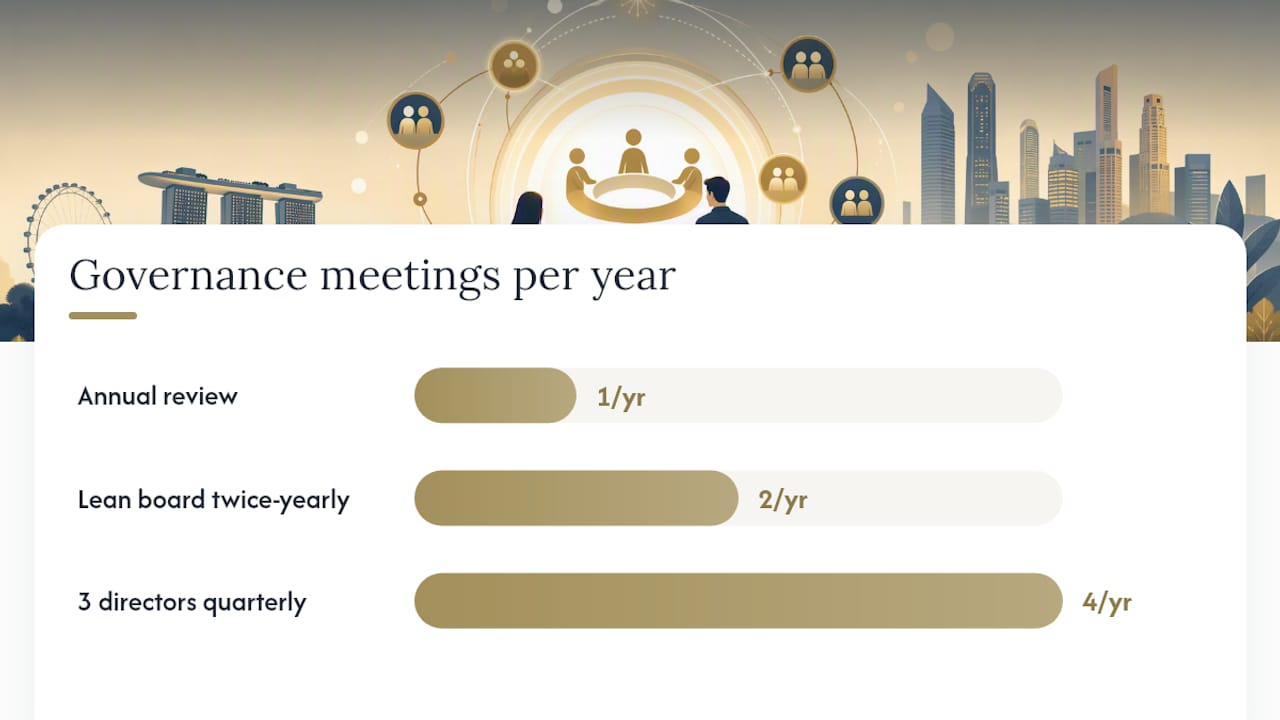
Trustee decision frequency: a family that meets quarterly to approve distributions costs more to service than one with an annual review cycle
Audit triggers: more entities and more transactions increase the likelihood of a full audit rather than a lighter review
Cross-border holdings: assets outside Singapore often mean coordinating with foreign counsel, which adds both time and fees
Pairing the PTC with a fund vehicle under the 13O or 13U tax incentive schemes adds a separate layer of cost. Families frequently underestimate this because they budget for the PTC alone and forget the fund structure sitting beside it needs its own compliance and administration spend.
Pro Tip: Count your governance meetings before you count your assets. A PTC with three directors meeting quarterly and producing formal minutes costs meaningfully more to run than one with a lean board meeting twice a year, even if the underlying trust assets are identical.
When Does a PTC Actually Make Financial Sense?
Practitioners generally treat somewhere around S$40 million to S$50 million in family assets as the point where a PTC’s fixed costs start paying for themselves against the flexibility and continuity it provides. Below that, a licensed trust company acting as trustee directly is usually more proportionate, since you get professional trusteeship without carrying a separate corporate entity’s full compliance load.
A useful way to see the math:
A family with S$60 million in mixed assets, two operating trusts, and one overseas property portfolio might expect first-year costs near the higher end of the S$25,000 to S$90,000 band, given the drafting complexity.
Annual recurring costs for that same family would likely sit in the upper half of the S$18,000 to S$60,000 range, driven by audit requirements and multiple trust administration lines.
A simpler single-trust structure with domestic assets only could land near the lower end of both ranges.
The mistake most families make isn’t underestimating the setup fee. It’s assuming governance runs itself once the paperwork is signed, when in practice the ongoing meetings, minutes, and compliance reviews are what actually keep the structure defensible.
How Long Does It Take to Get a PTC Fully Operational?
Setup timelines commonly quoted at 6 to 10 weeks tend to describe the best case, not the typical one. Complex ownership structures or multiple controllers almost always push things toward the longer end.
The realistic sequence looks like this:
ACRA name application and incorporation — usually the fastest step once documents are ready, often completed within days
Constitution and trust deed drafting — this stage frequently takes the longest, since it involves legal review, family input, and revisions across multiple drafts
Licensed administrator onboarding and AML checks — the licensed trust company will run its own know-your-customer process on the family and underlying beneficiaries, which can extend the timeline if documentation is incomplete
Bank account opening and funding — banks apply their own due diligence on top of the administrator’s checks, and this step often becomes the final bottleneck
Families move faster when they arrive with clean KYC documentation, clear records of beneficial ownership, and an administrator engaged early rather than after the trust deed is finalized. Waiting to bring in the licensed administrator until the structure is “ready” is one of the more common ways a straightforward setup stretches into months.
Why MAS Rules Shape Most of Your Recurring PTC Fees
Most of what you pay every year traces back to a regulatory requirement, not a discretionary service. The Monetary Authority of Singapore requires PTCs to engage a licensed trust company to handle AML/CFT oversight and reporting, since the PTC itself typically isn’t licensed to perform that function independently.
That single requirement generates several fee lines at once:
External licensed administrator fees for AML/CFT reviews and regulatory reporting
ACRA annual filings required of any Singapore resident company, PTC or otherwise
IRAS tax return preparation, since trustee-service income interacts with corporate tax obligations
Audit triggers that activate once transaction volume or entity count crosses certain thresholds
Corporate secretarial retainer covering statutory filings, resolutions, and register maintenance
None of these are optional add-ons. They’re the operating cost of running a Singapore resident company that also happens to hold family wealth, and skipping any one of them creates real regulatory exposure rather than just an administrative gap.
Budgeting for Your PTC: A Practical Checklist
Separate your one-off setup budget from your recurring budget before you ask anyone for a quote.
Questions worth asking any licensed administrator or adviser upfront:
What’s included in the base administration fee, and what triggers additional billing?
How are audit costs scoped, and at what asset or transaction threshold does a full audit apply?
What happens to fees if the family adds a second trust or a fund vehicle later?
Pro Tip: Ask for a staged engagement rather than a single lump quote. A document review and structure recommendation upfront lets you see real numbers before committing to full setup. Elite Legacy Planning offers exactly this kind of initial trust consultation before any structure gets built.
Balancing Control and Cost: A Practical Reflection
Families chase a PTC for control, then get surprised the control has a maintenance bill attached. That’s not a flaw in the structure. It’s the tradeoff. Governance done properly, with real meetings and real minutes, costs money every year. Elite Legacy Planning’s private trust company and living trust services exist precisely because most families want that control without having to build the compliance machinery alone.
— Joseph
Get a Tailored PTC Cost Estimate for Your Family
Elite Legacy Planning scopes your specific asset mix, trust count, and governance needs before quoting anything, so you’re budgeting against your actual structure instead of a market average pulled from a guide. That matters more than it sounds: two families with the same net worth can land S$30,000 apart in year-one fees depending on cross-border holdings and how many trusts sit underneath the PTC.

Our Private Trust Company service page walks through what’s included in setup and ongoing administration, and it’s the fastest way to see how the ranges in this guide map onto your own family’s balance sheet. If you’d rather talk it through directly, you can book a consultation and get a scoped estimate before committing to full engagement.
Sources
Recommended
Comments